












ପଟ୍ଟଚିତ୍ର
Journey
into the origins
of Pattachitra
A ritual temple art from India
Place of faith
An Ancient
temple town
in odisha
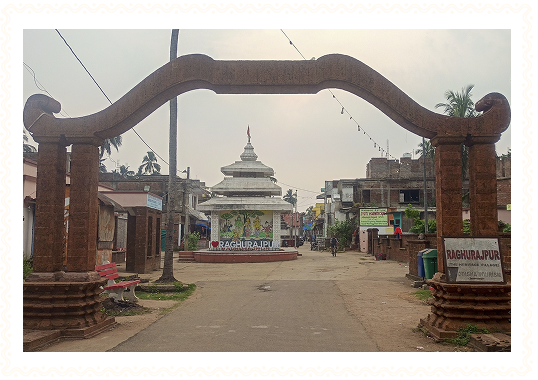
14 kms from Puri,
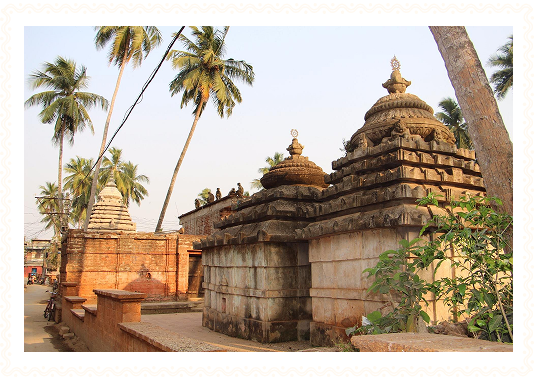
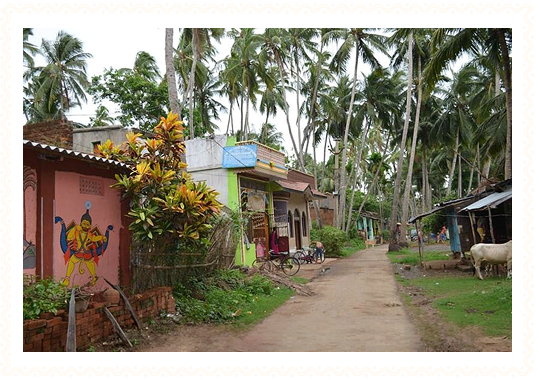
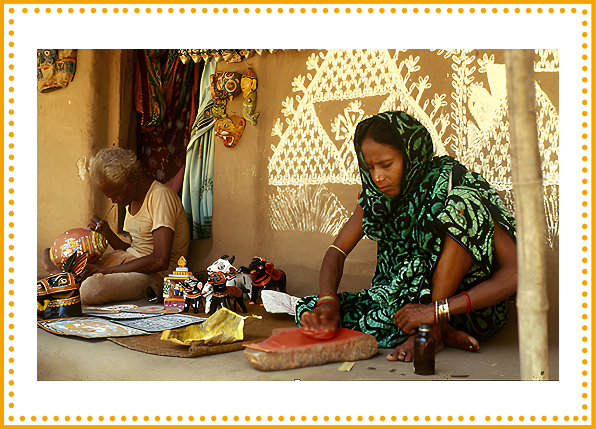
On the banks of the river Bhargavi and surrounded by groves of palms, mangoes and coconuts, lies Raghurajpur, a hamlet with a difference. Unassuming from the outside except the welcoming arch, it bears the hallmark of simplicity. Preserving something inside without which the temple city’s experience would be incomplete.
test

UNESCO VILLAGE

Raghurajpur is a UNESCO Heritage village, an artisan cluster that is the epicenter of the famed art of Pattachitra (ritual cloth-based scroll paintings).

An ancient heritage, the art form is known for its intricate details as well as mythological narratives and folktales inscribed in it.

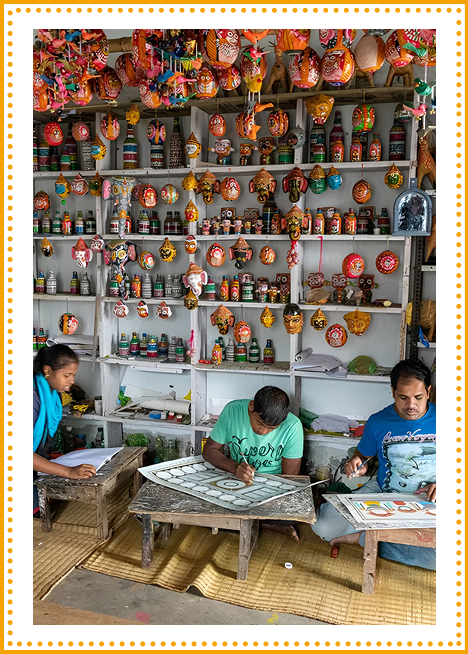
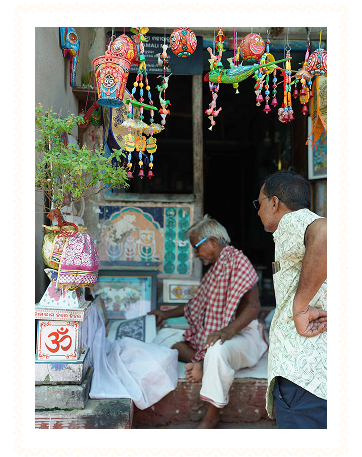
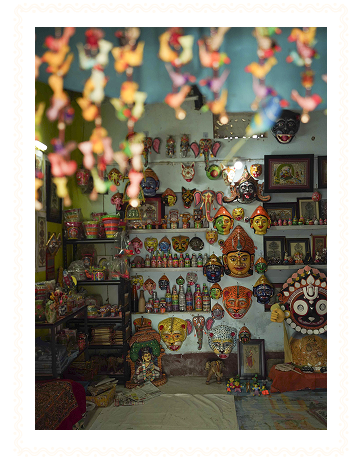
The hamlet houses more than a hundred families, with most of them engaged in some form of art & craft that preserves this living heritage. Each house is a living museum.

test

EACH HOUSE,
A LIVING CONSERVATORY

test
test

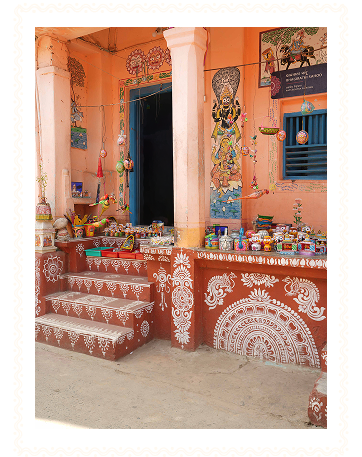
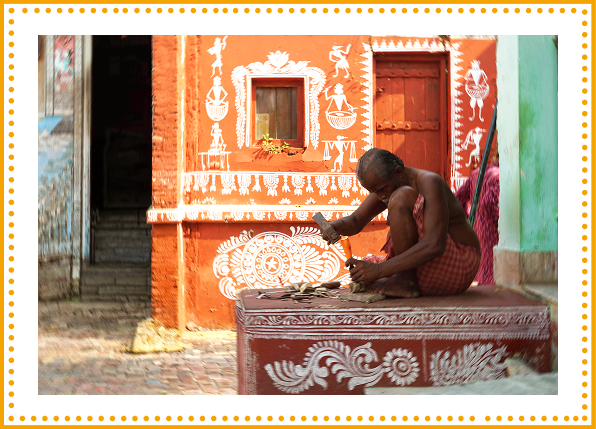
All houses in Raghurajpur–in some way or the other–are repositories of knowledge and culture, preserved and renewed by successive generations of artists and their families, many of whom have won awards and laurels.

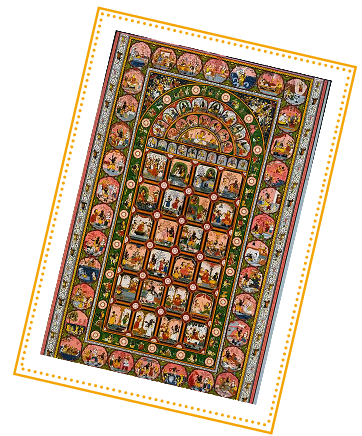
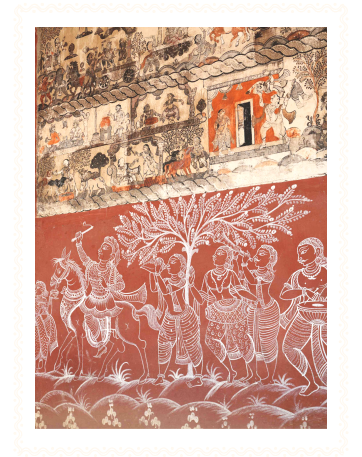
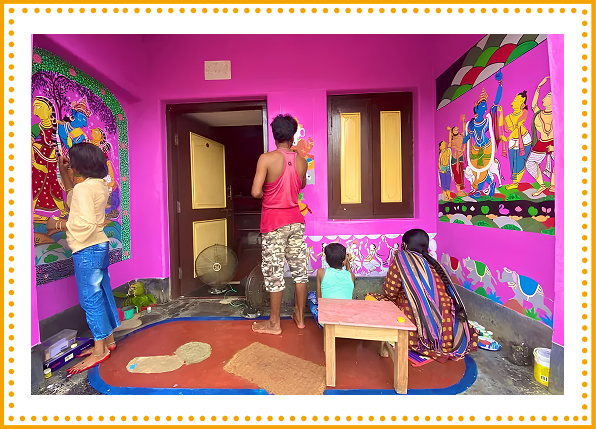
Bhitti Chitras (wall paintings) adorn the walls of houses in Raghurajpur. These unique murals narrate the history of Pattachitras and their aesthetics, advocating for the form more than what words ever could.

test
test
test
test

The houses and its inhabitants breathe life into Pattachitra as well as other forms of arts and crafts practiced widely in the village.

5th century BC

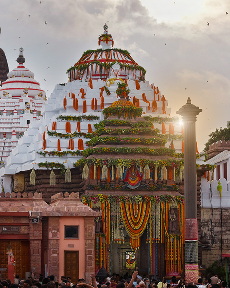
Raghurajpur is an artisan’s universe devoted to Lord Jagannath. Where each carrier of this ancient craft and art is bound to the other by an unshakeable devotional spirit. A living faith that has transcended generations from 5th Century BC to an eternity. From the sanctum sanctorum to the living rooms, they retain their legend.


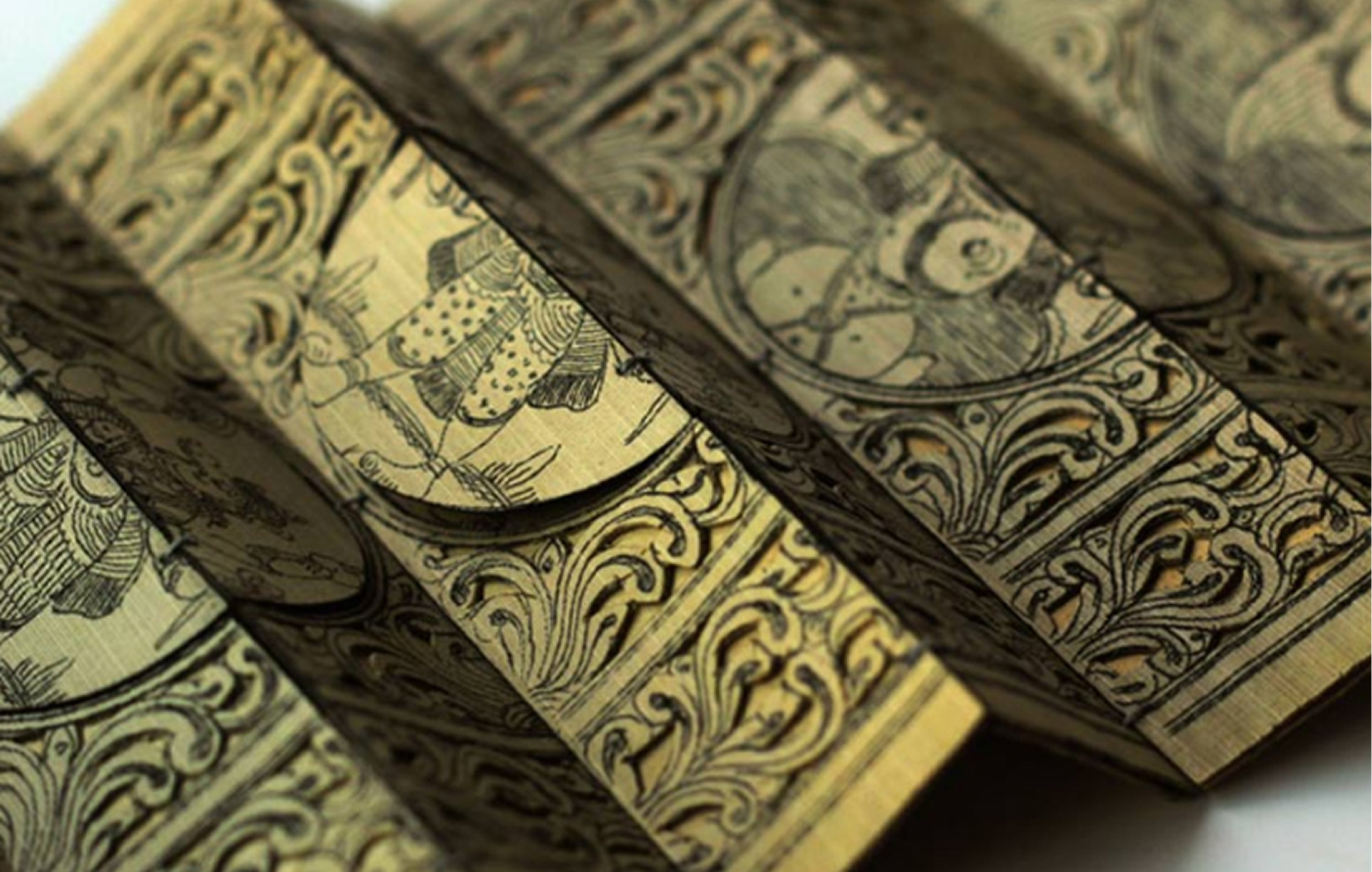
The word Pattachitra derives from the Sanskrit terms ‘Patta’ meaning ‘cloth’ and ‘Chitra’ meaning painting and literally translates to ‘painting on cloth’.

19th century AD

While the form had always been practiced widely by the Chitrakaras (artists), the advent of middlemen led to a period of ebb.

Much of the trade of the artists from Raghurajpur, Danda Sahi and Puri were controlled by the creditors community thereby stifling the presence and spread of this heritage.

The legend of Jagannath
and a temple art

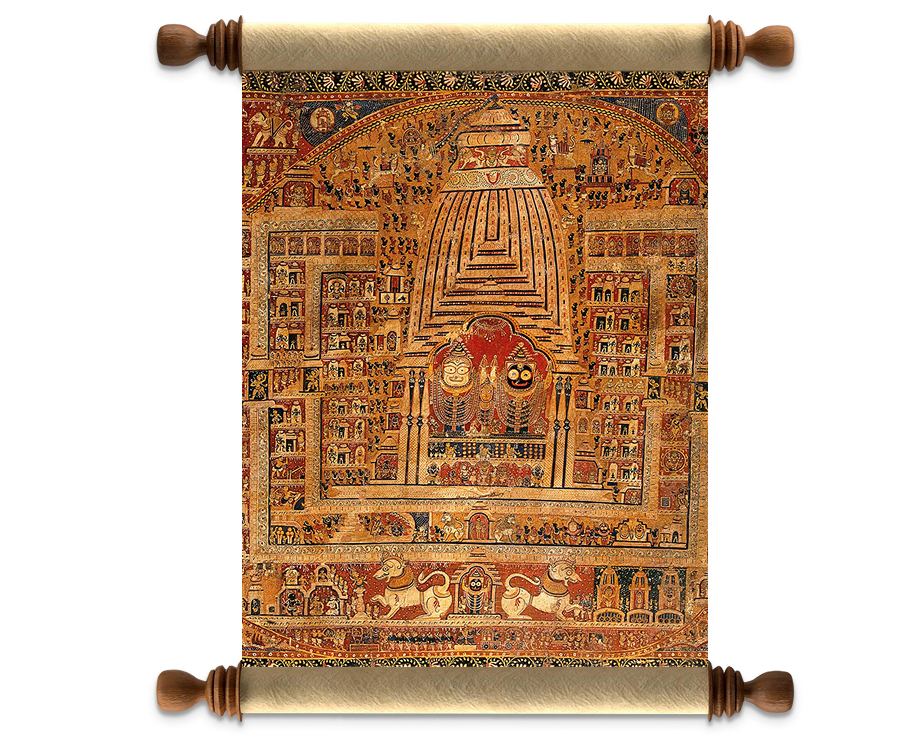
Pattachitra usually gets dated back to the 10th and 12th centuries with the rise of the Jagannatha sect, but some sources suggest that it goes back to the 5th century BC with earlier forms of murals and scroll paintings. It is also mentioned in the earliest treatise on painting called ‘Chitralaksana’.
Pattachitra developed at a time when the medieval eastern school flourishing under the Palas, Senas and Varmans had disappeared. Coinciding with this, the imperial eastern Ganga dynasty which–ruling over parts of Odisha since 5th century AD– rose to prominence in the 11th century. 
The Gangas were known to be patrons of art and architecture, and the present structure of the Jagannatha temple was primarily built during the reign of King Anantavarman Chodaganga Deva.
Jagannatha– meaning ‘Lord of the World’ – became the state deity under the imperial Gangas. This was the time when Pattachitra witnessed its rise and proliferation.

Pattachitras originated from Puri, and then grew outwards, eventually covering most of present-day Odisha and West Bengal. Known for its intricate designs and vibrant colours, Pattachitra continues to remain one of the oldest and most popular art forms in the country.

While elders work on intricate motifs and designs, children in every household can be seen scribbling figures from mythology and folk lore on their verandah. Their training starts very early.

The Anasara Pati

Pattachitra’s usage as narrative scrolls in olden days has helped in retaining its style and techniques. Most cultures have followed an oral tradition for transmission of epics, history, folklore and cultural stories amongst a few. Narrative scrolls add a visual element to this oral tradition. Brahmins used these Pattachitras to better explain episodes from the epics, kavyas and puranas.

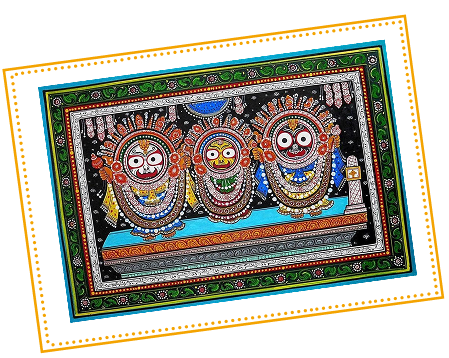
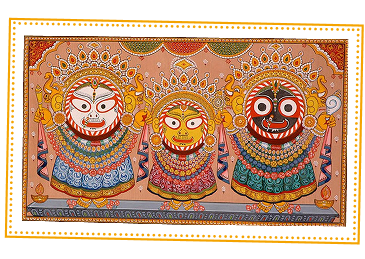
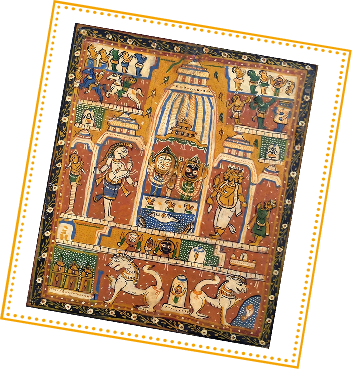
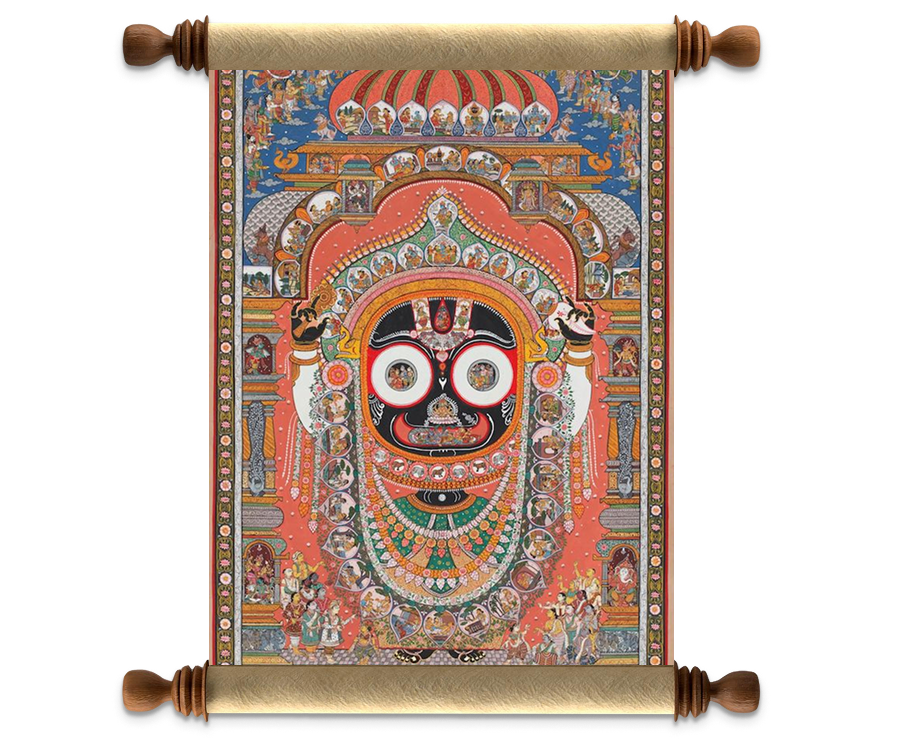
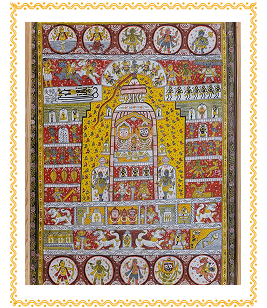
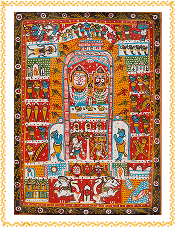
This specific type of Pattachitra called the Anasara Pati is used as a substitute for the vigrahas (idols) of Jagannatha, Balabhadra and Subhadra when they fall ill after the Snana Purnima. While the deities recover during this Anasara (or Anavasar) period for two weeks leading to the Rath Yatra, the devotees worship their images on the Anasara Pati.

While Pattachitra is the overarching term for the traditional form of painting, a specific manifestation of it is the Jatri Patti, which acts as a souvenir for visiting tourists and devotees.


The creation of the Jatri Patti led to the popularization of Pattachitra, and the eventual development of villages engaging in its creation.

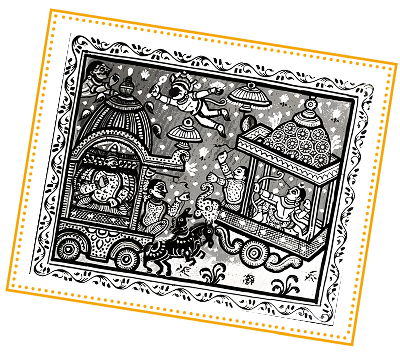
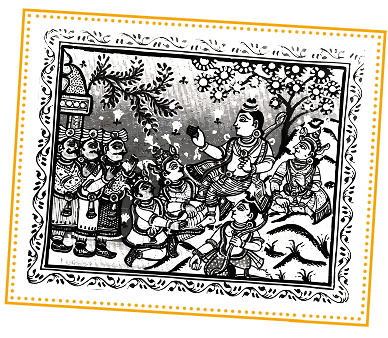
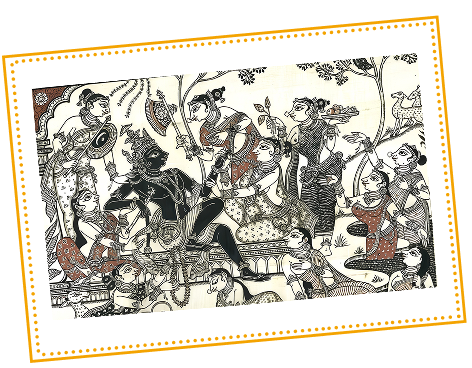
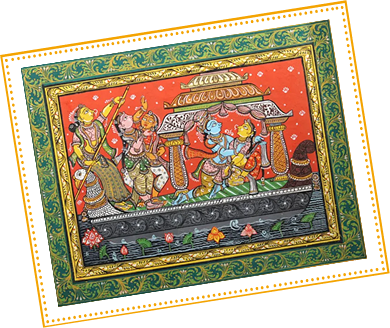
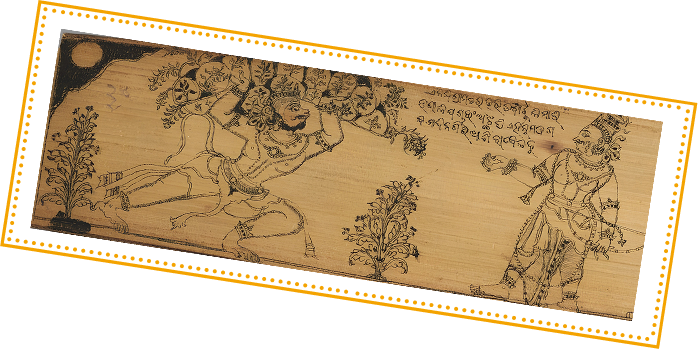
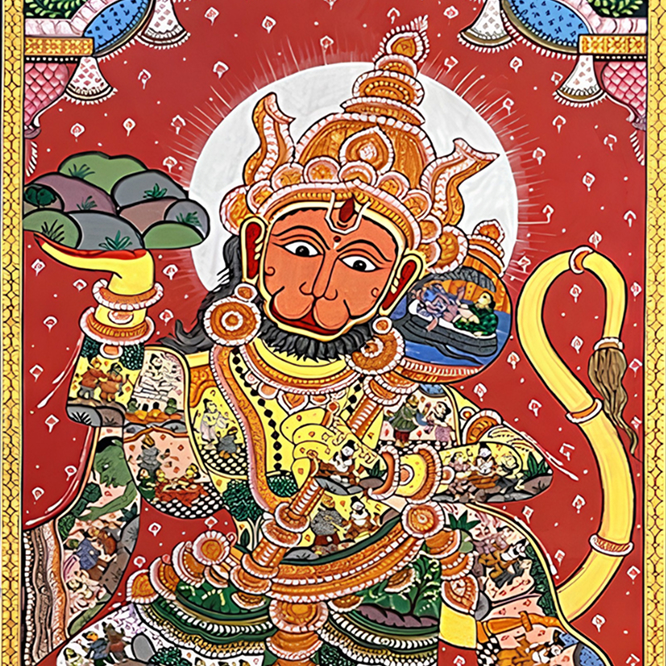
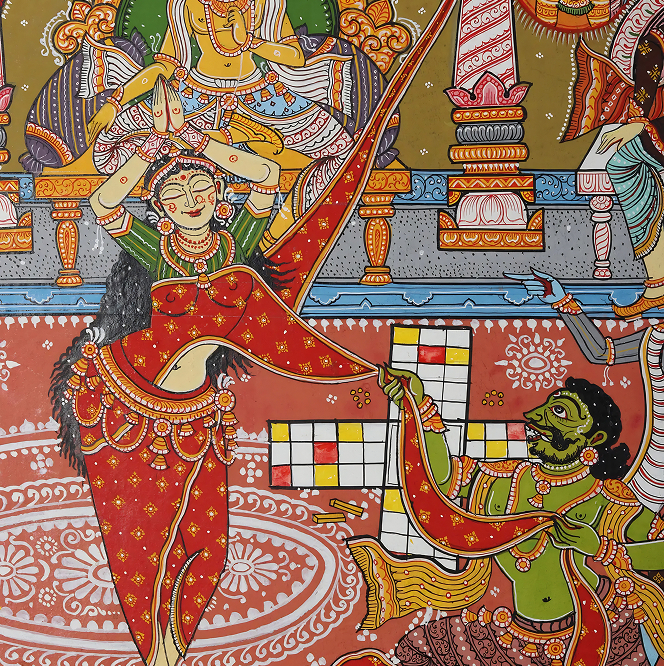
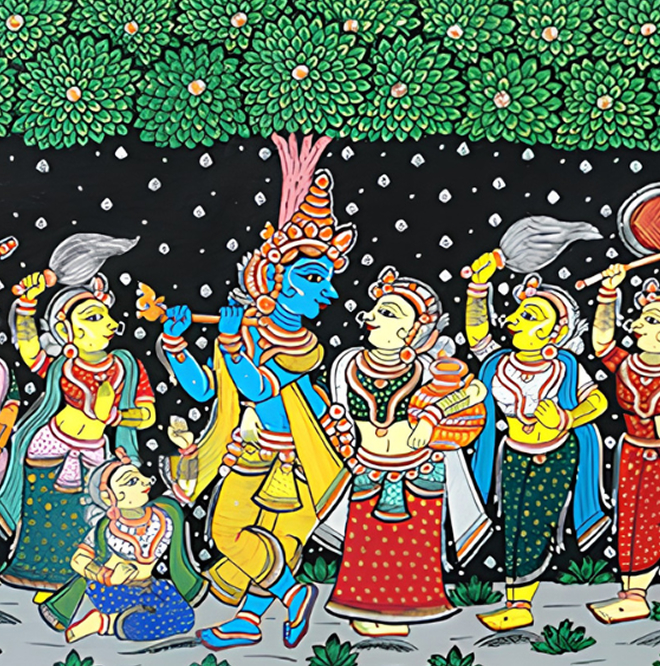
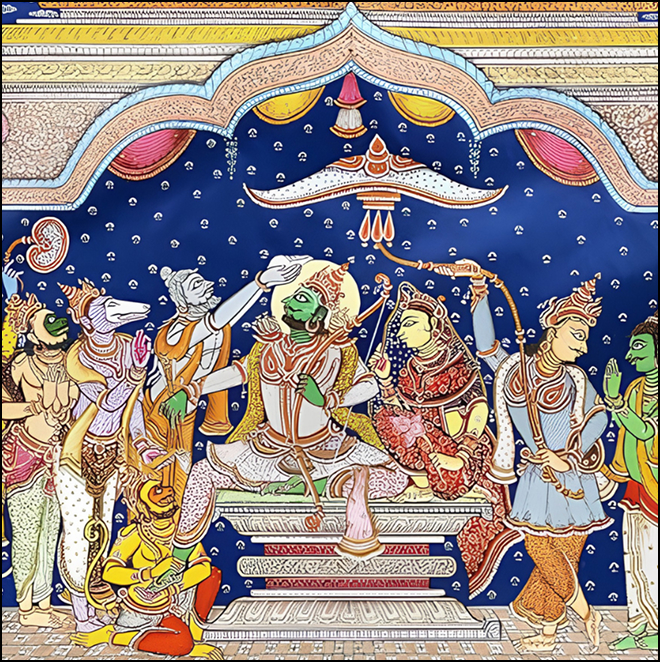
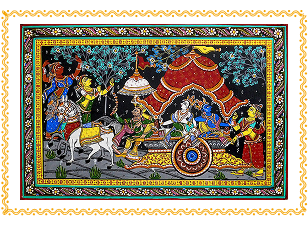
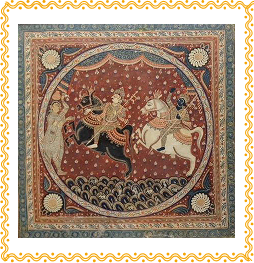
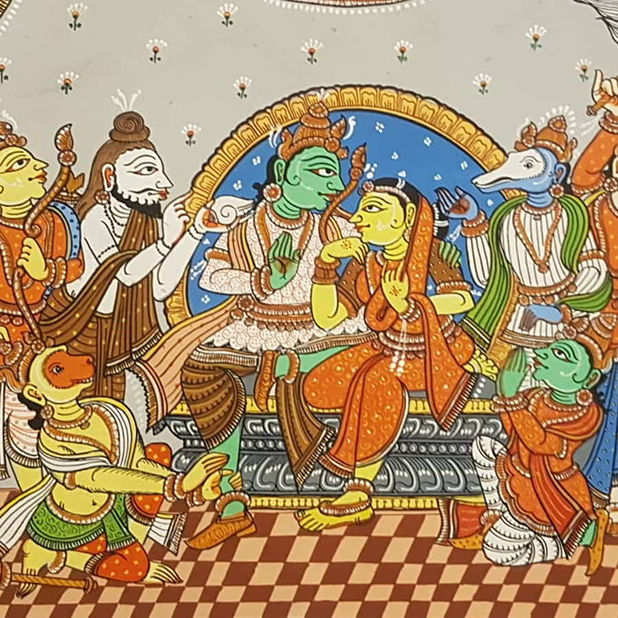
Ramayan Pattachitra painting 1Ramayan Pattachitra painting 2Ramayan Pattachitra painting 3Ramayan Pattachitra painting 4

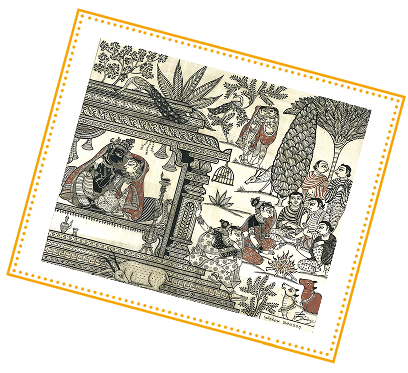
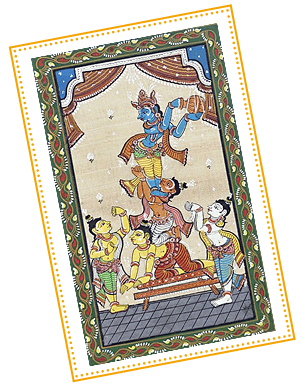
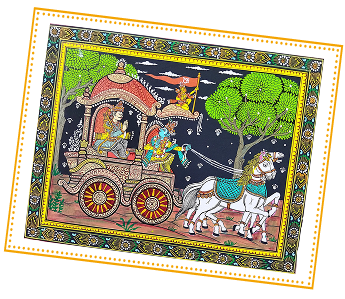
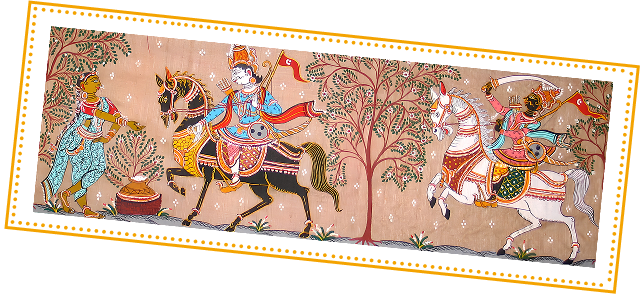
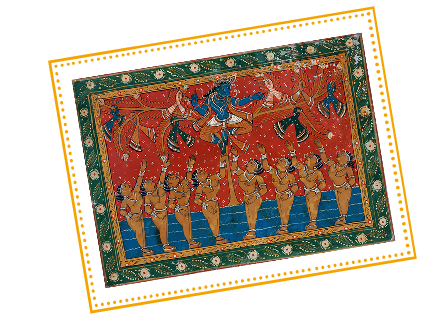
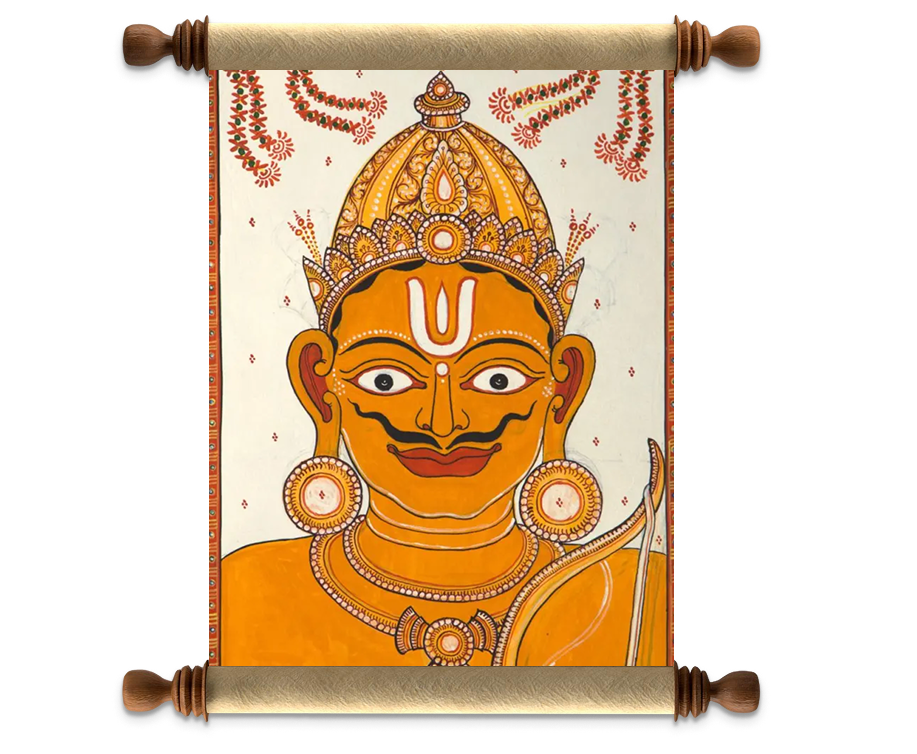
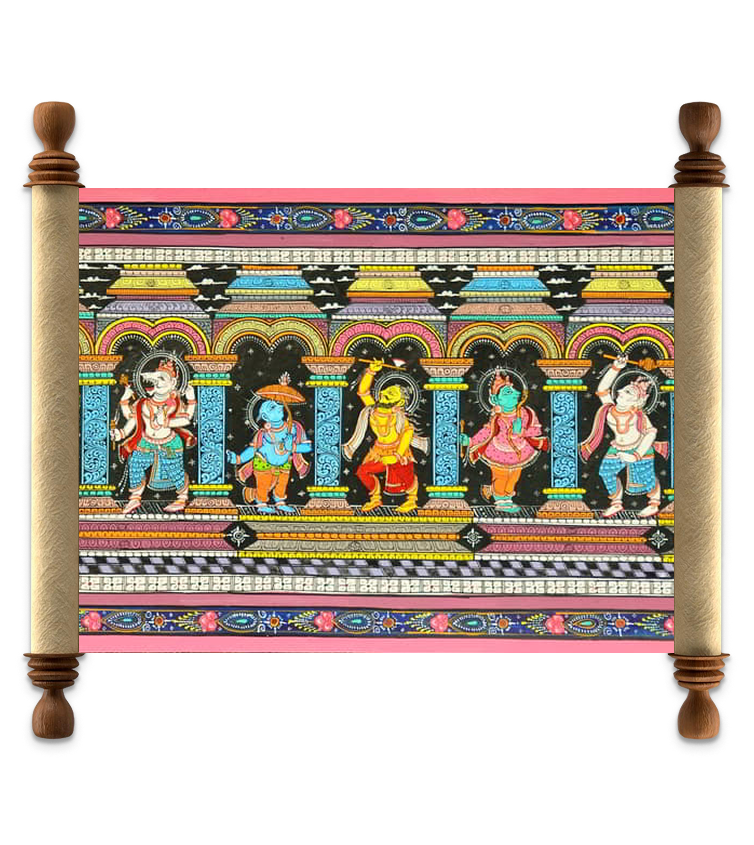
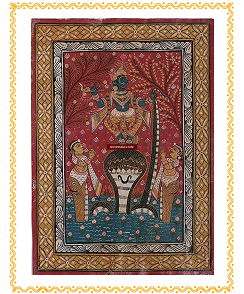
Episodes from epics like Ramayan and Mahabharat also appear frequently, with stories of Vastraharana, Ram- Ravan Yuddha, Rasleela, Krishna playing the flute surrounded by gopis being popular ones. Scenes from Kavyas also appear on some paintings.


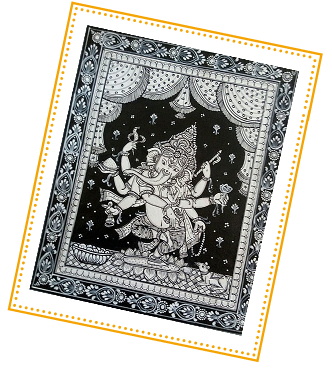
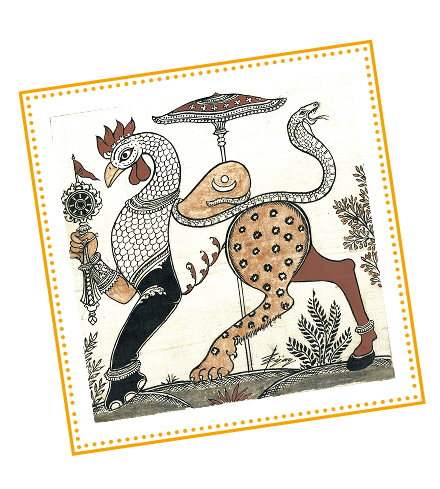
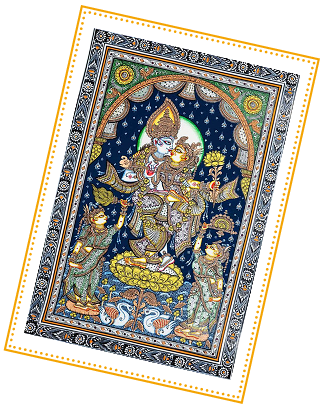
Another category of paintings covers all other Hindu Gods including Saraswati, Lakshmi, Parvati, Shiva, Ganesh, Parshuram, Durga, Dasha Mahavidya and the likes.

Ramayan Pattachitra painting 1
Ramayan Pattachitra painting 2
Ramayan Pattachitra painting 3
Ramayan Pattachitra painting 4
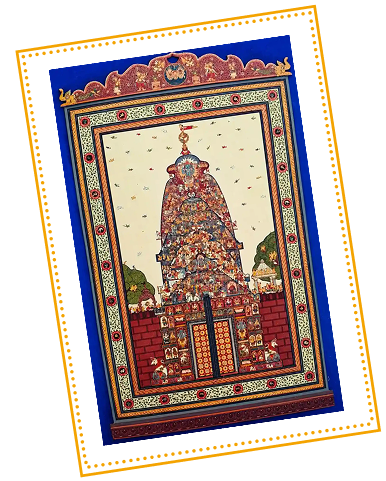
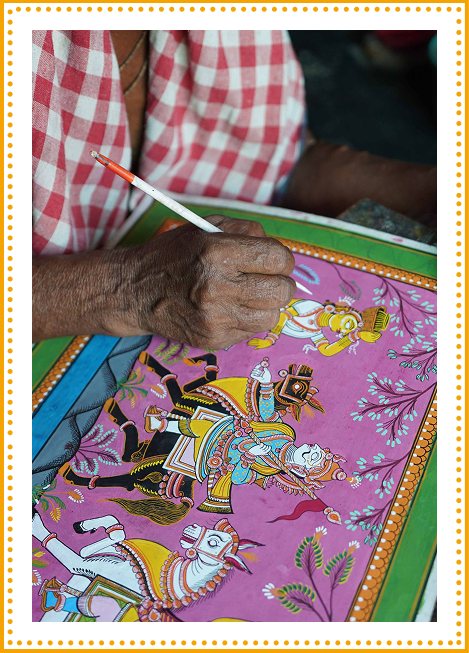
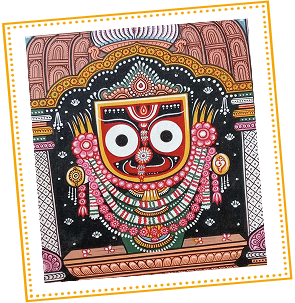
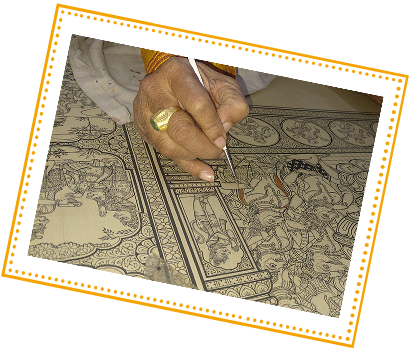
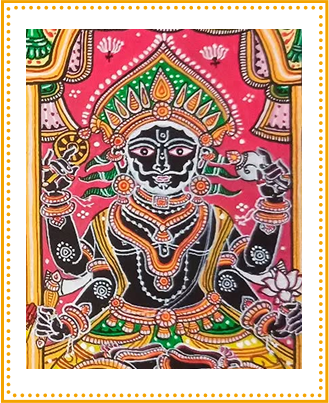
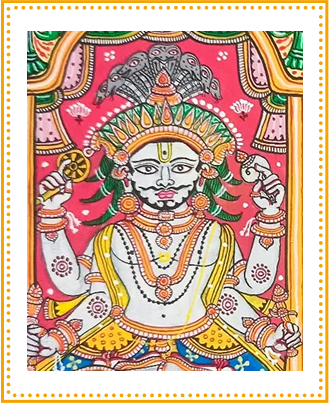
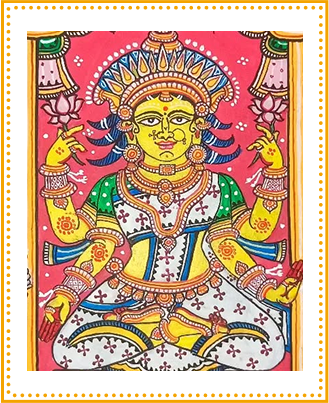
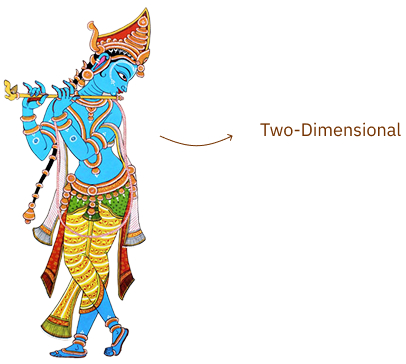
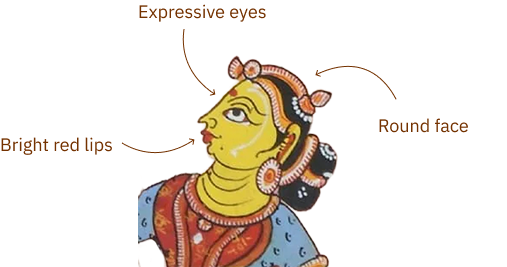
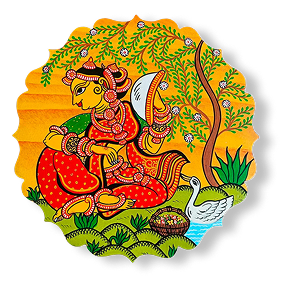
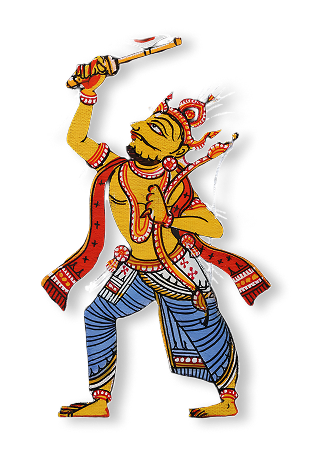
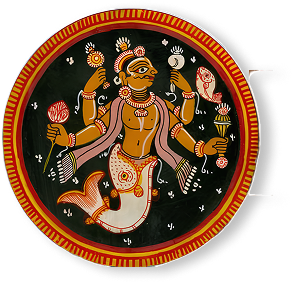
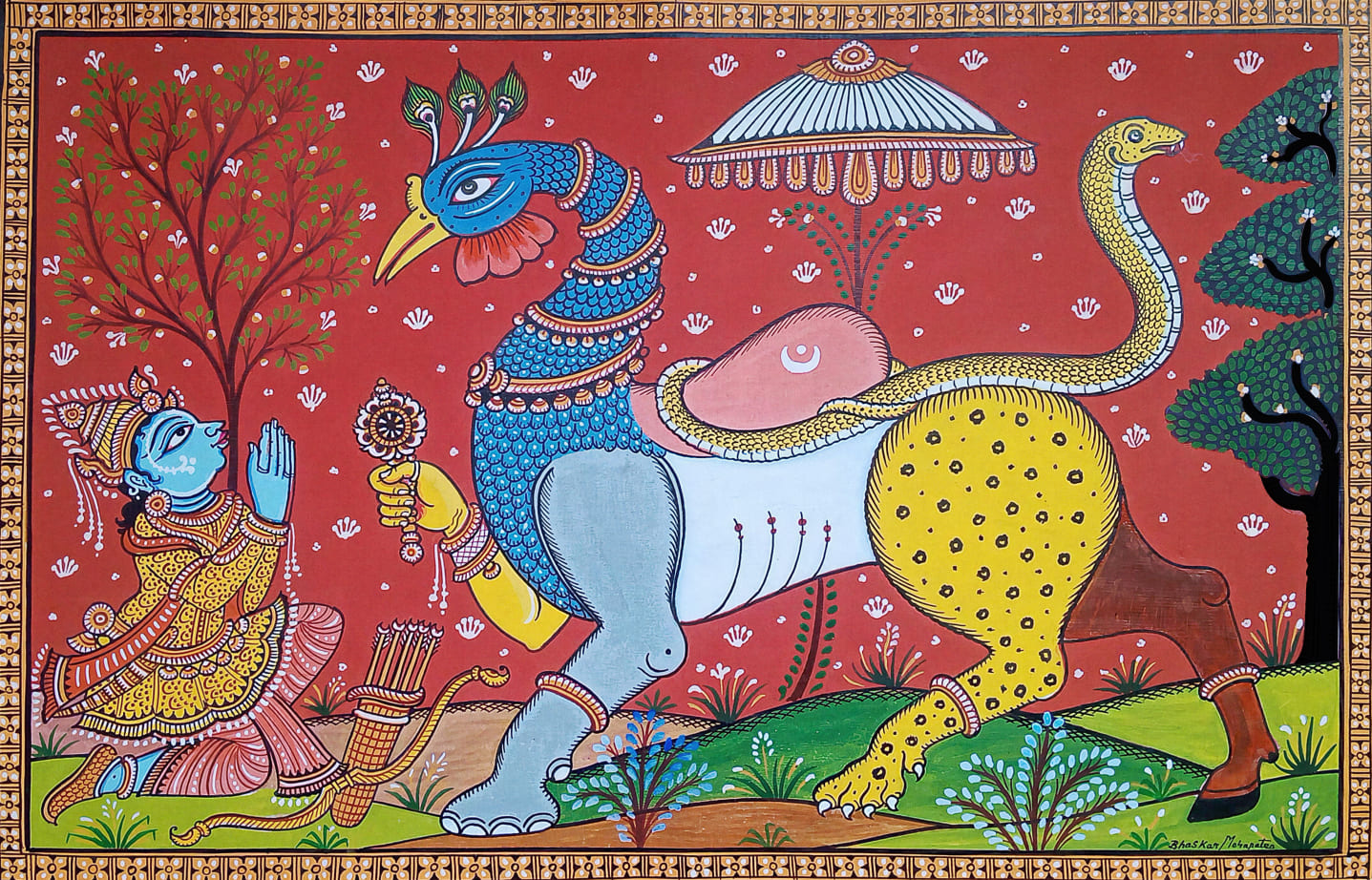
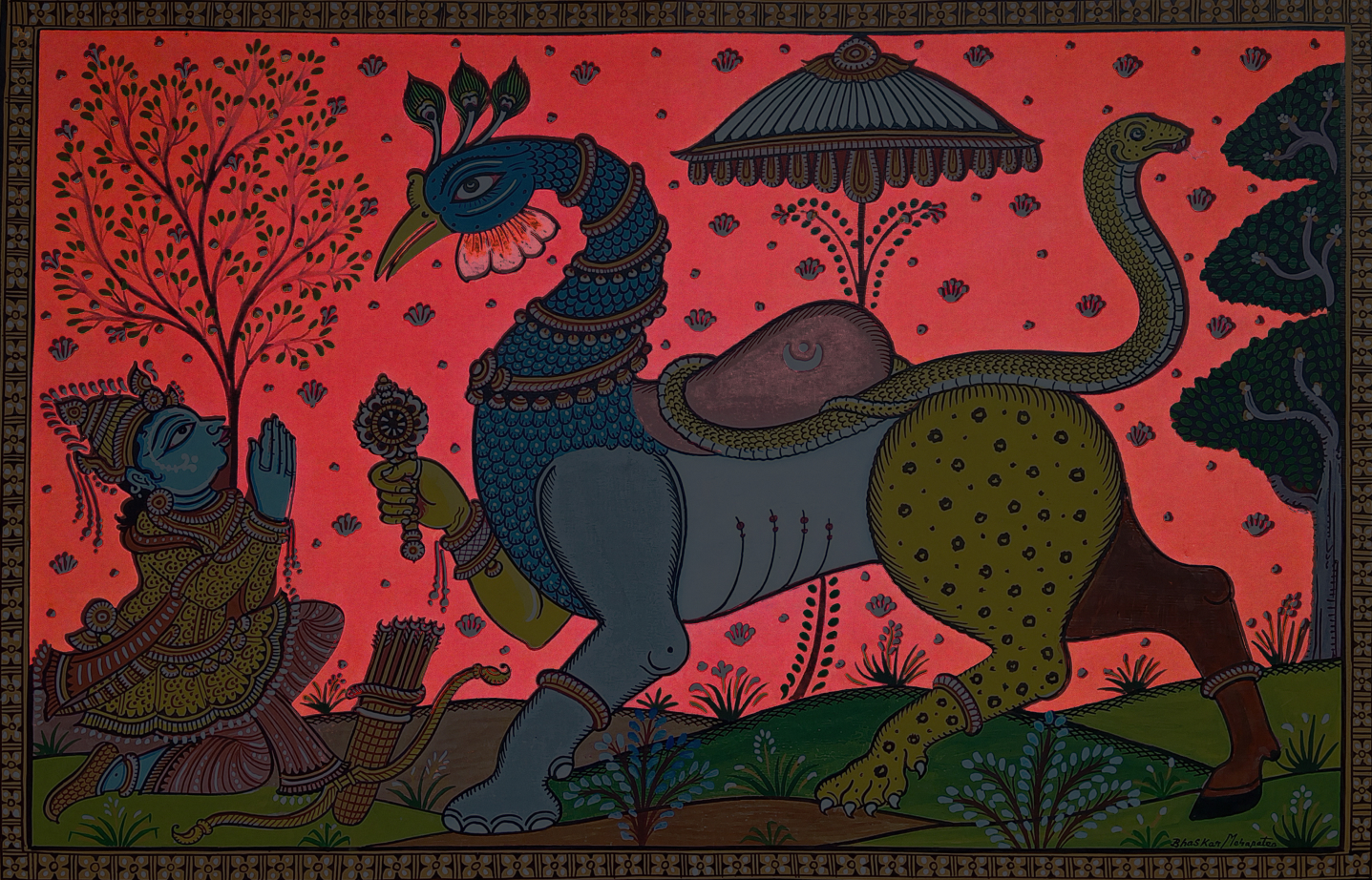
Pattachitra paintings are known for their distinctive two-dimensional style, lacking depth and perspective. The figures typically feature round faces, pointed noses, large expressive eyes, and bright red lips, creating a cohesive visual identity.

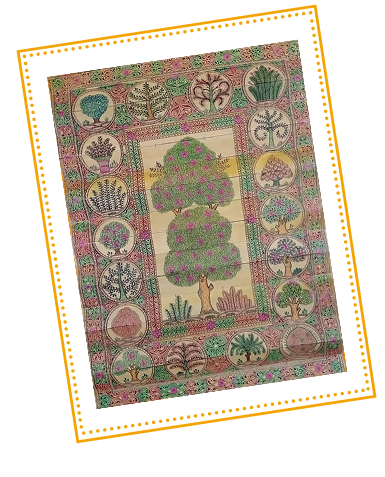
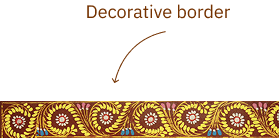
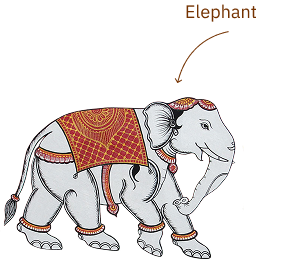
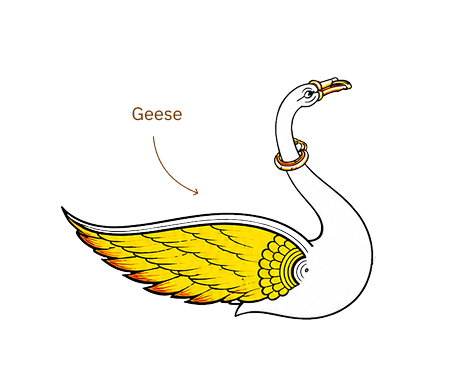
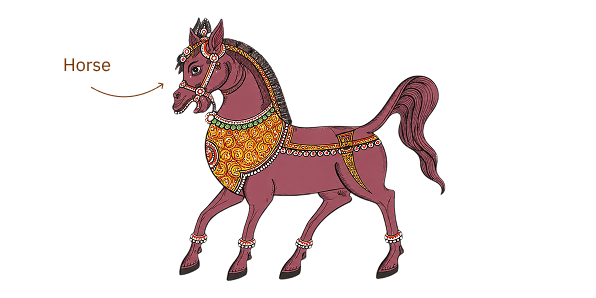
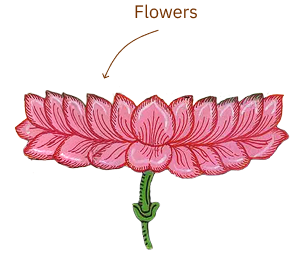
Intricate decorative borders, inspired by Kalingan temple architecture, are an essential element, often adorned with motifs such as flowers, creepers, elephants, geese, and horses that beautifully frame the central narrative.

It takes a village

The craft starts
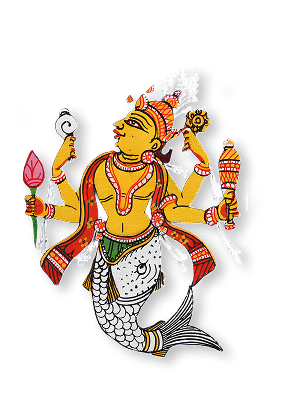
with a fish

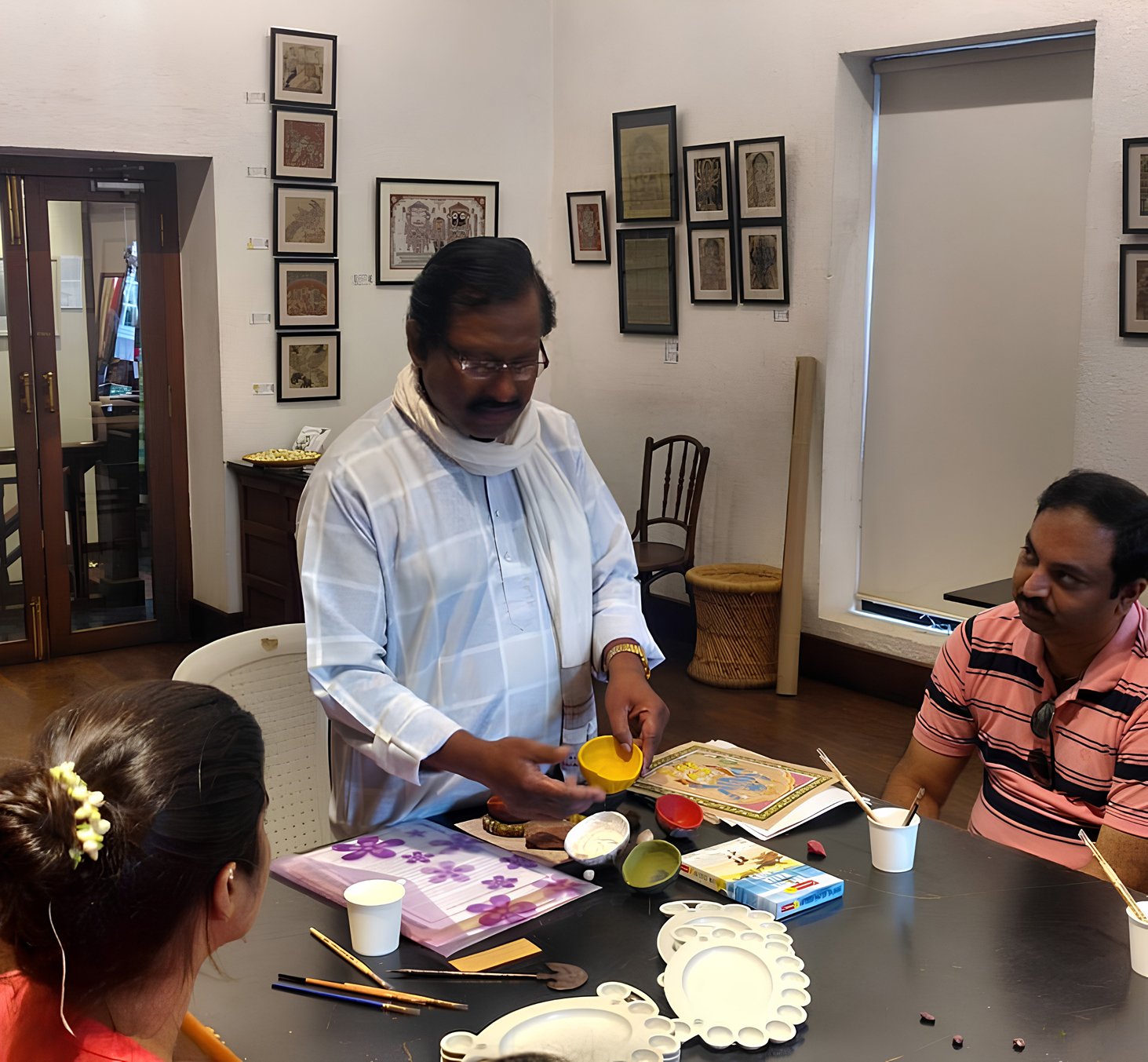
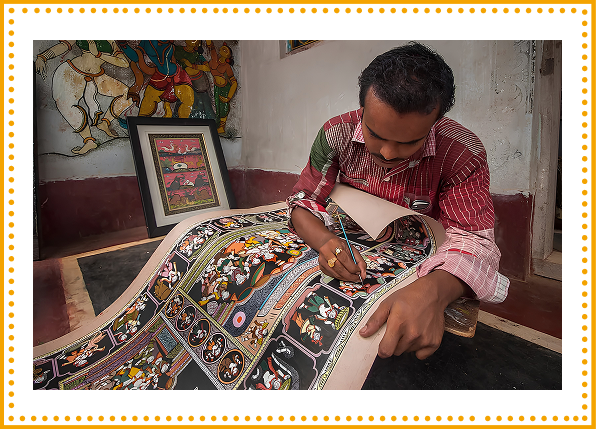
The tradition of Pattachitra is passed down through generations, and follows a Guru-Shishya (Master-Protege) tradition. Raghurajpur views Pattachitra as a community art form, where the residents do not charge children for teaching them. The focus remains on preserving the art form by making the newer generations Chitrakaras who can carry forward the legacy.
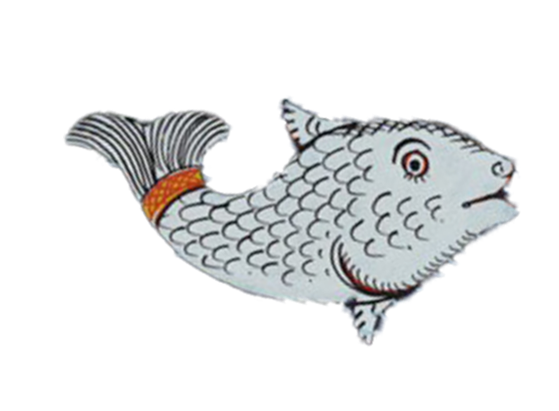
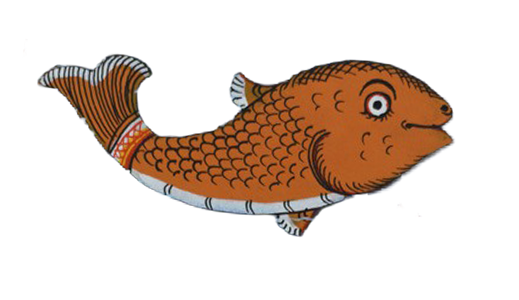
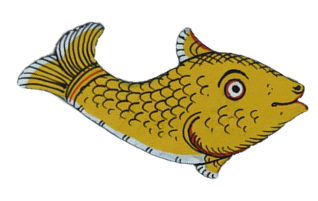
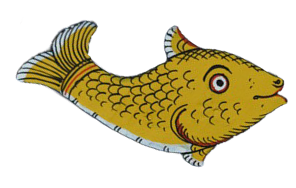
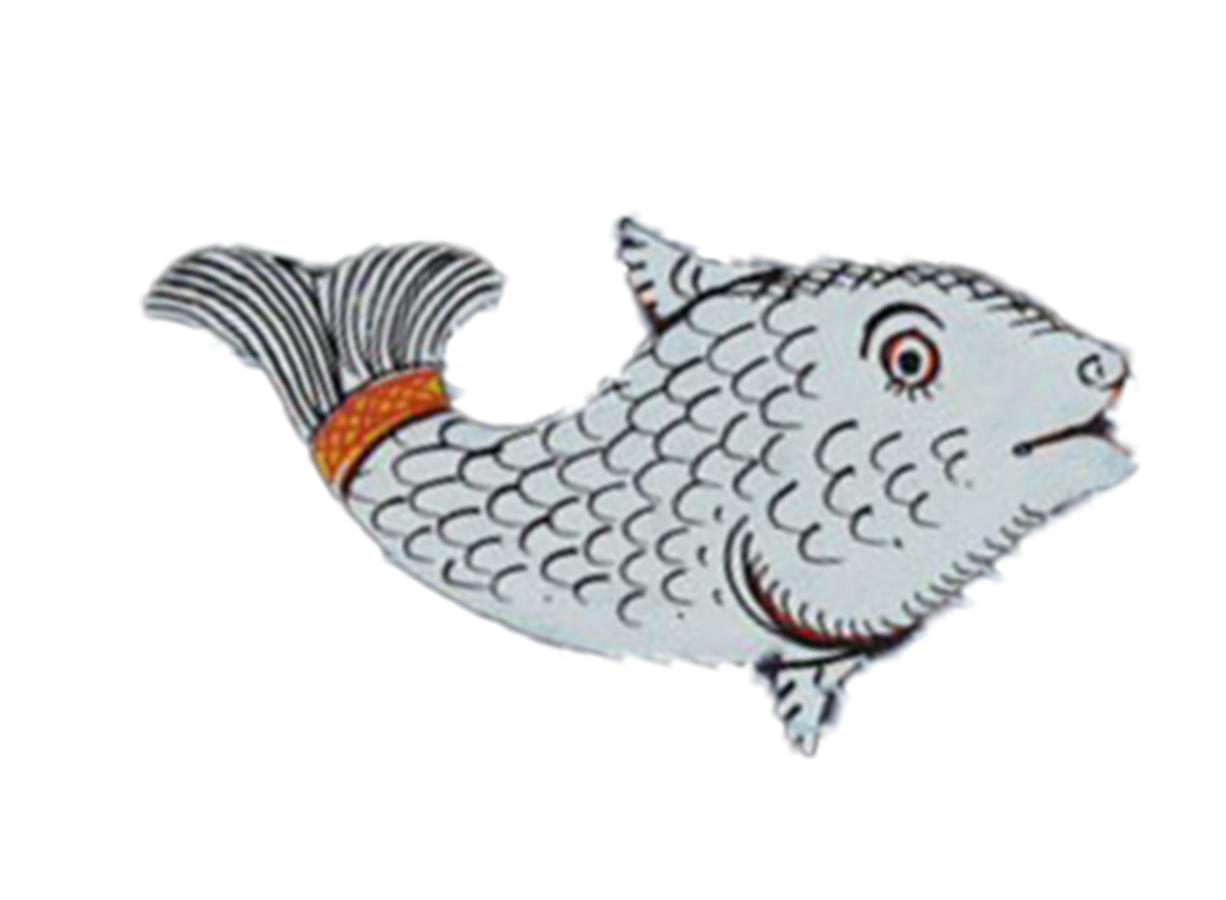
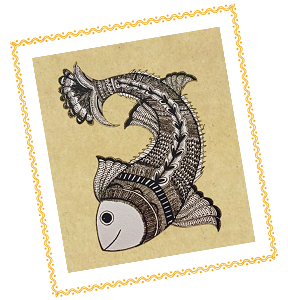
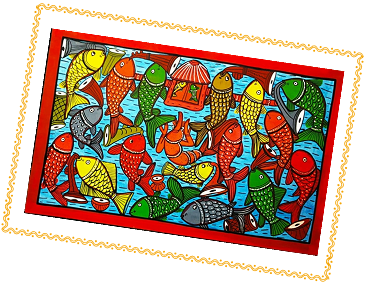
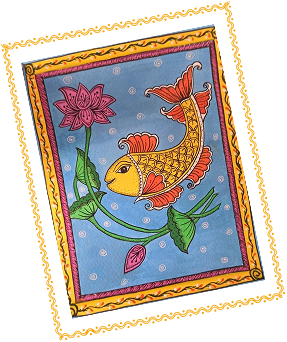
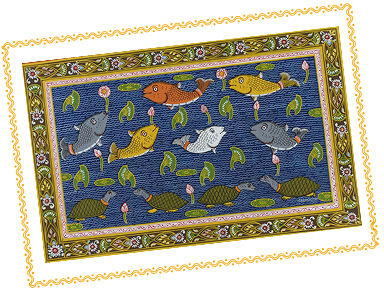
When children are initiated into the art form, they are allowed to learn at their own pace and follow their natural curve. The first drawing for these children is a fish, which is considered auspicious in Odiya culture. They train themselves further by drawing lines, borders, birds and animals and perfecting them. As they grow older, they are allowed to paint on the bigger areas of the pattas, the final details being left to the older folk.

COTTON IS MY CANVAS

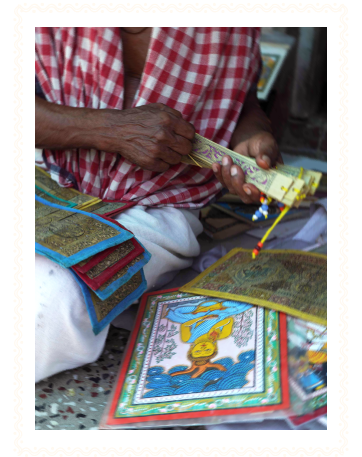
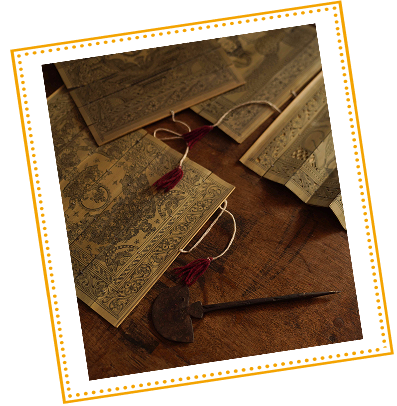
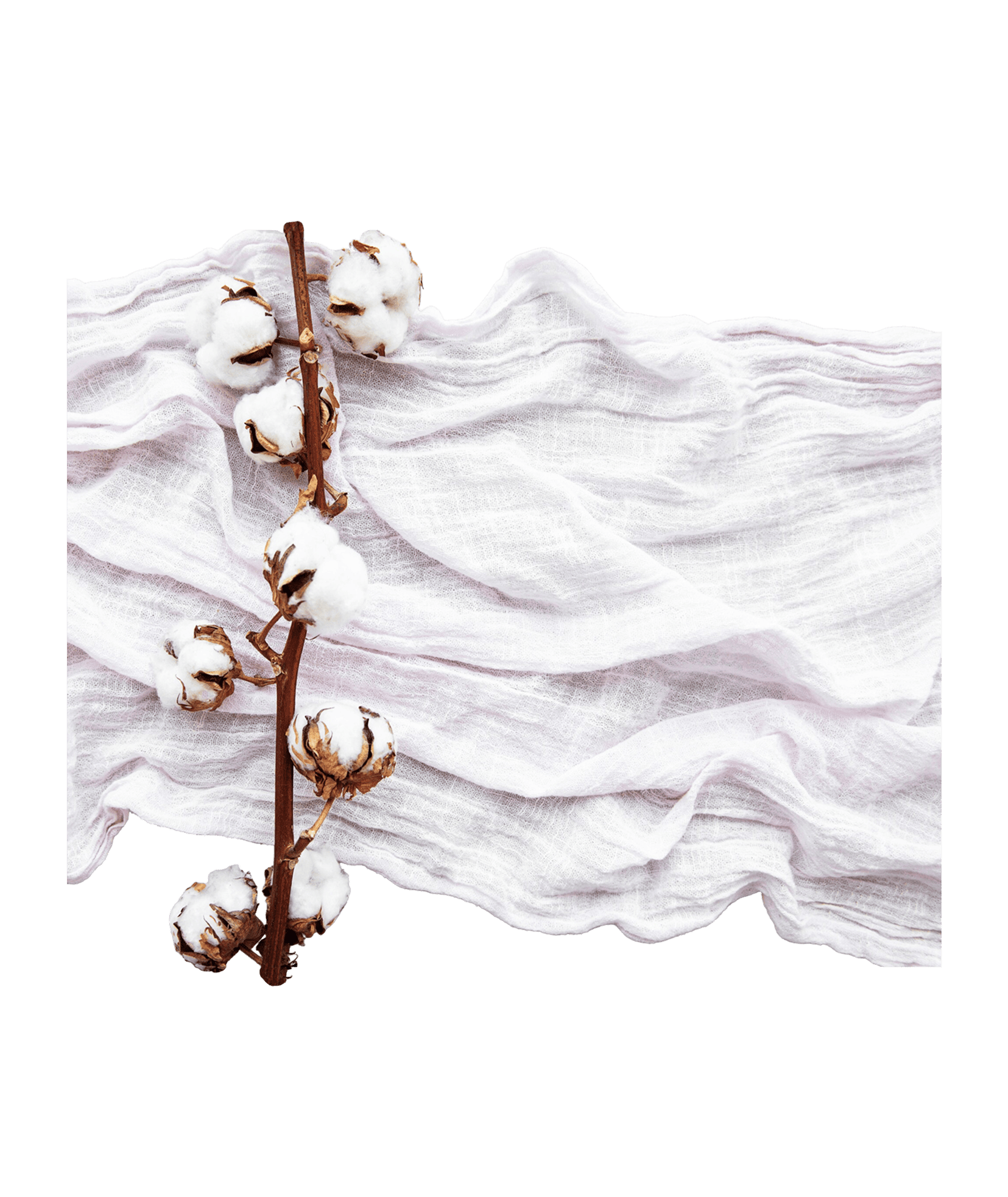
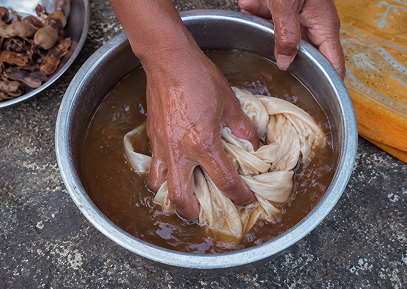
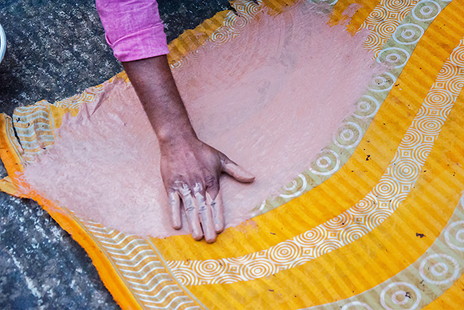
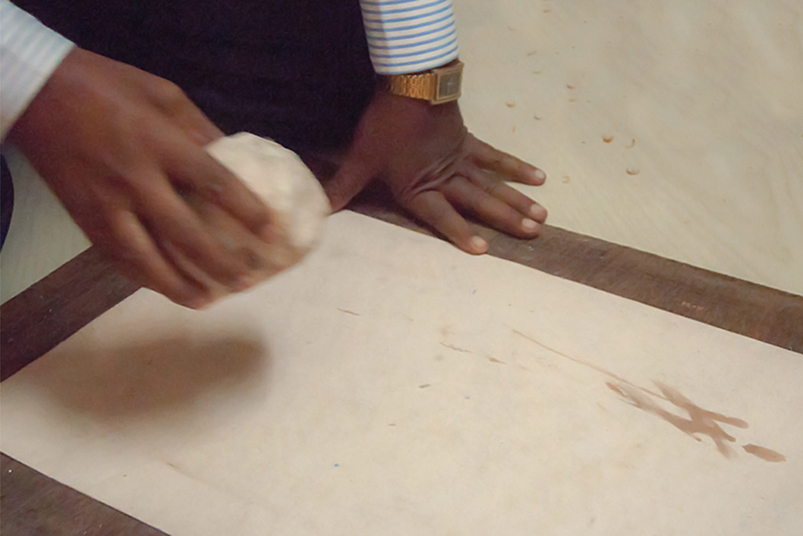
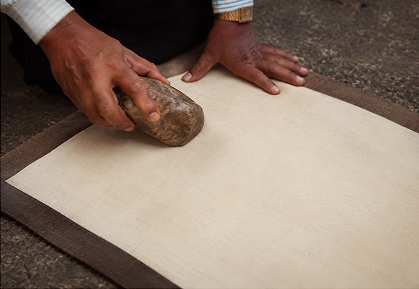
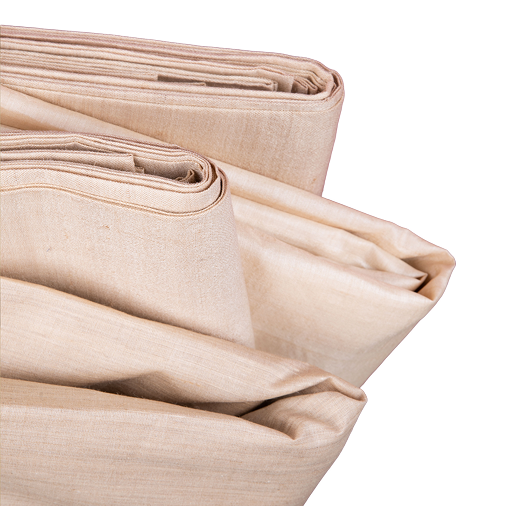
Treated cotton cloth (patta astra) is the most widely used canvas for Pattachitra. Preparing the patta is an arduous process involving several steps.

Five natural colours and a brush

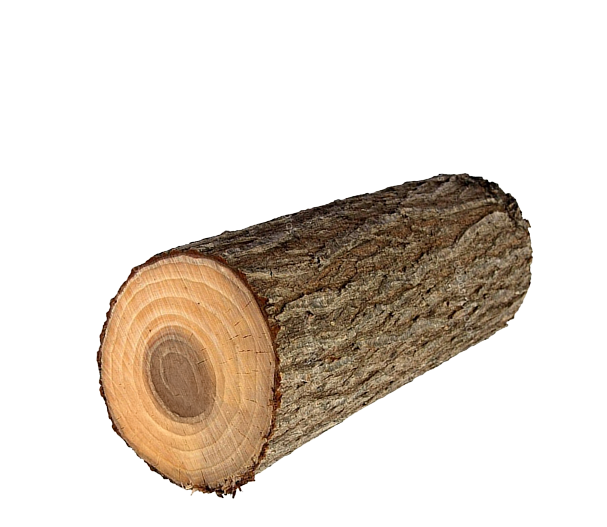
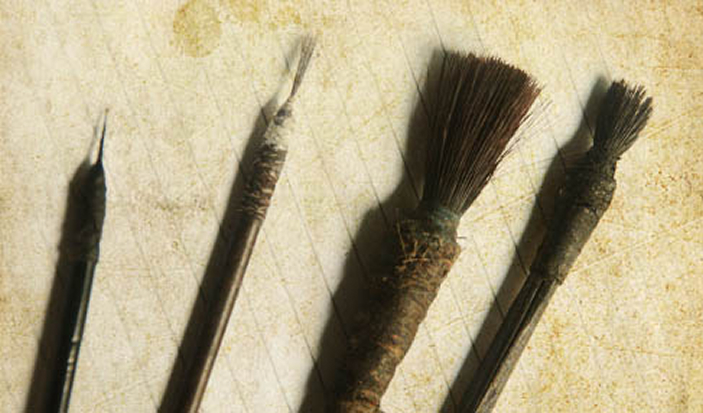
Brushes used for painting are carefully prepared using natural hair, and stuck on a wooden or bamboo handle.
Finer brushes are made using the hair of mice, mongoose, or squirrels, whereas bigger and coarser brushes are made using the hair from the neck of a buffalo. Roots of Kiya (Kewda) plants are also used to make brushes of varied thicknesses.
The colours used in Pattachitra are made from natural elements, thus maintaining their traditional roots. The five colours primarily in use–black, white, yellow, red, blue– are called pancha tattva.
Traditional Pattachitra painting demonstrating natural pigments
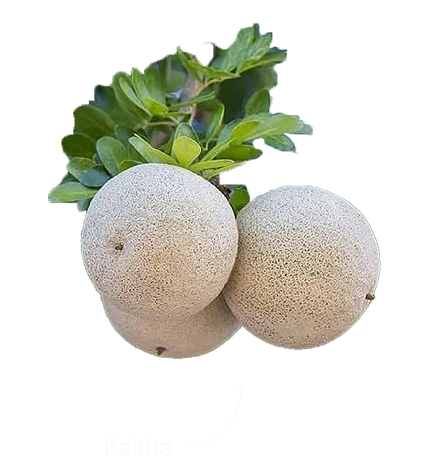
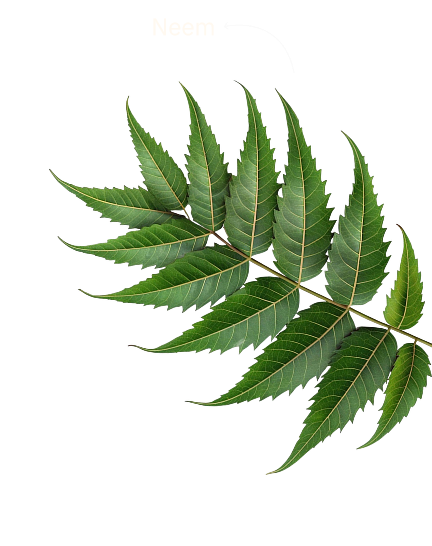
Gum of Kaitha (Wood apple/Bel) or Neem tree is used as a base for all the colours to make them sticky and durable.
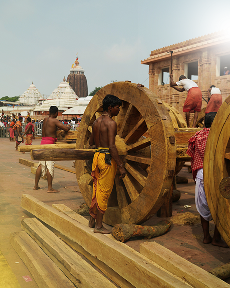
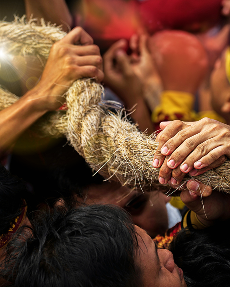
RATH
YATRA
Enter the world that has always been looking back at you.

The Lord as the

timeless inspiration

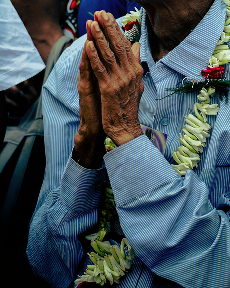
The entire village worships Lord Jagannath and practices its art in devotion to the deity, owing to Lord Jagannath being deeply connected with the Bhakti Movement in Odisha. The Bhakti movement sought to reform all strata of the society with its emphasis on personal devotion as a means to attain salvation.
The art of Pattachitra and the Jagannatha sect are inextricably linked to each other. The Chitrakaras’ devotion to Lord Jagannatha is visible in the themes of their paintings.
Some might call Lord Jagannatha myth or mythology. To the artists of Raghurajpur, Lord Jagannatha is their deity as well as their muse, and they take pride in their work. Chitrakaras see it as their duty to protect and further the arts and crafts of their village.

Artists

Pattachitra artisan with a large painted textile
Bhaskar Mahapatra seated with Pattachitra artworks
Artist working on a Pattachitra painting on the floor
Pattachitra artisan with a large painted textile

Jagannath Mahapatra

Recipient of the Shilp Guru Award

About

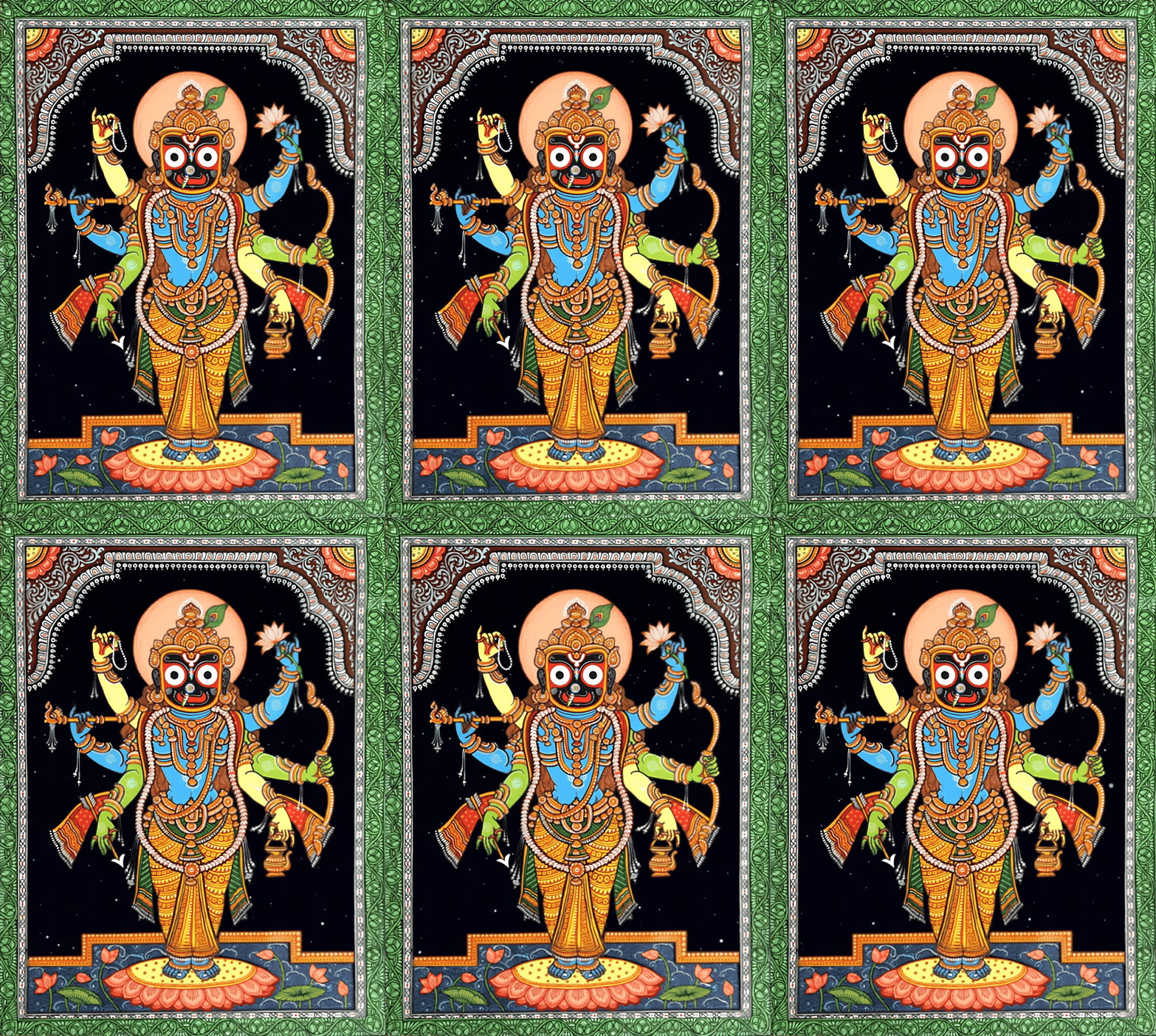
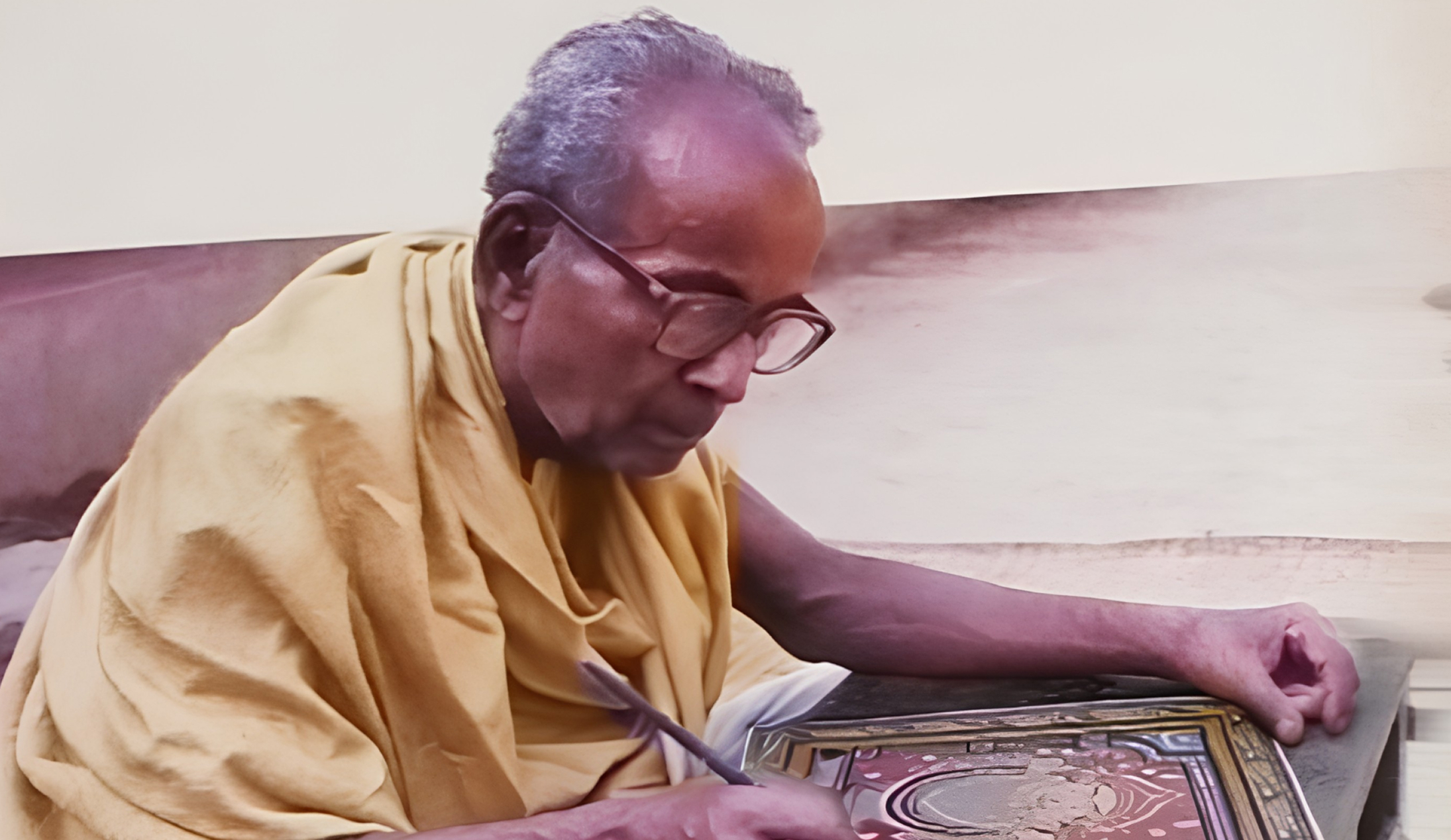
Jagannath Mahapatra played a major role in preserving the ritualistic identity of Patachitra during the early twentieth century. His paintings mainly focused on Lord Jagannath, Balabhadra, and Subhadra, maintaining the spiritual foundation of temple art traditions.

His famous Anasara Patti Series was created for temple rituals during periods when the deities were hidden from public view. Through symmetrical compositions, intricate detailing, and devotional purity, he safeguarded the authenticity of Odisha Pattachitra at a time when many traditional art forms faced decline.
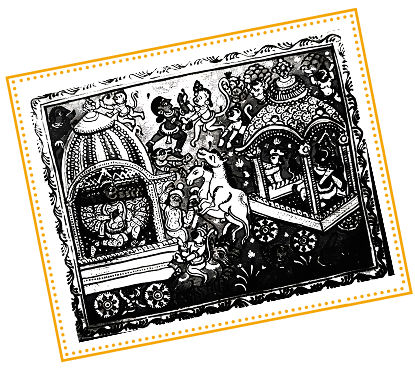
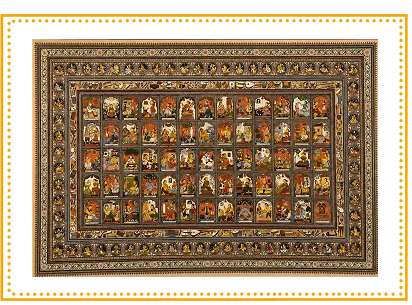
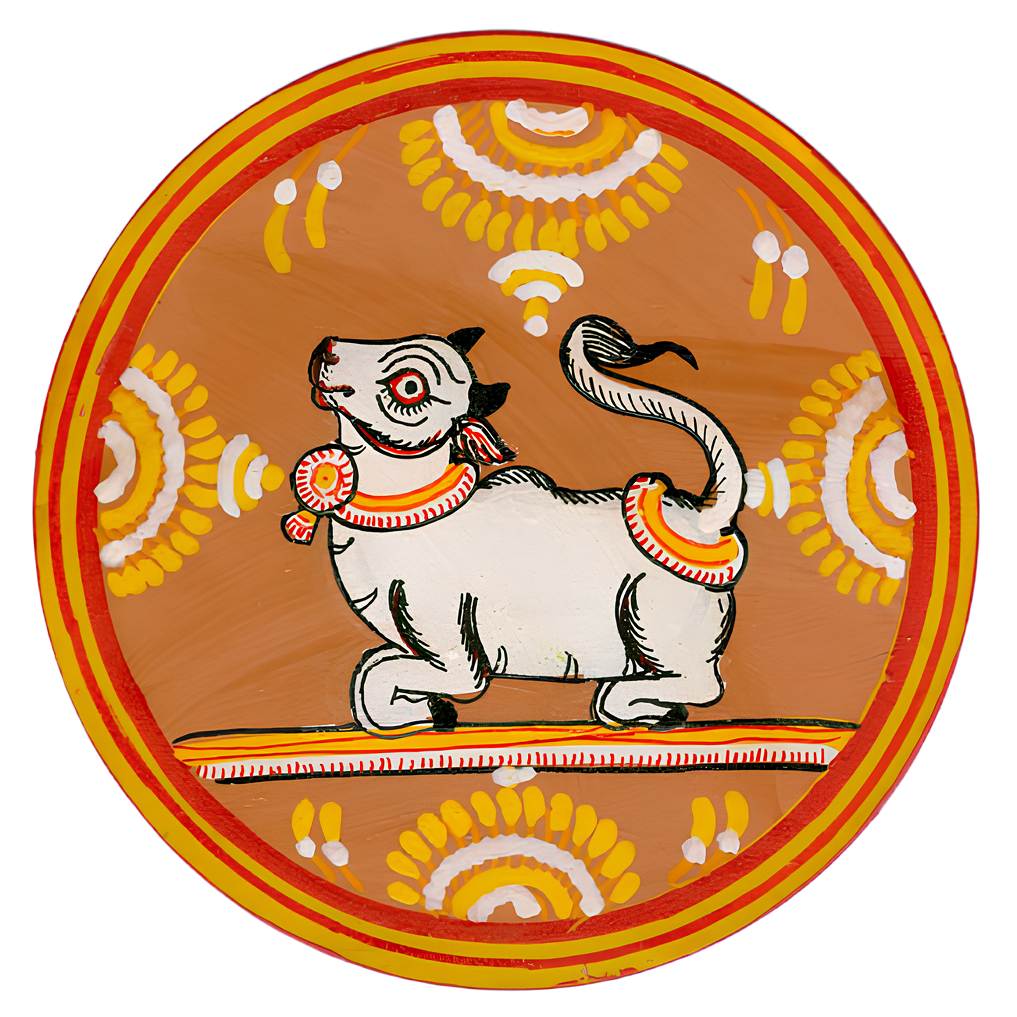
Circular ganjifa inspired Pattachitra motif
Jagannath Pattachitra panel
Craft objects and painted surfaces in Raghurajpur

Artists

Pattachitra artisan with a large painted textile
Bhaskar Mahapatra seated with Pattachitra artworks
Artist working on a Pattachitra painting on the floor
Pattachitra artisan with a large painted textile

Guru Sudhir & Urvashi Maharana

Recipients of the Shilp Guru Award (2023) and the National Award (2023)

About

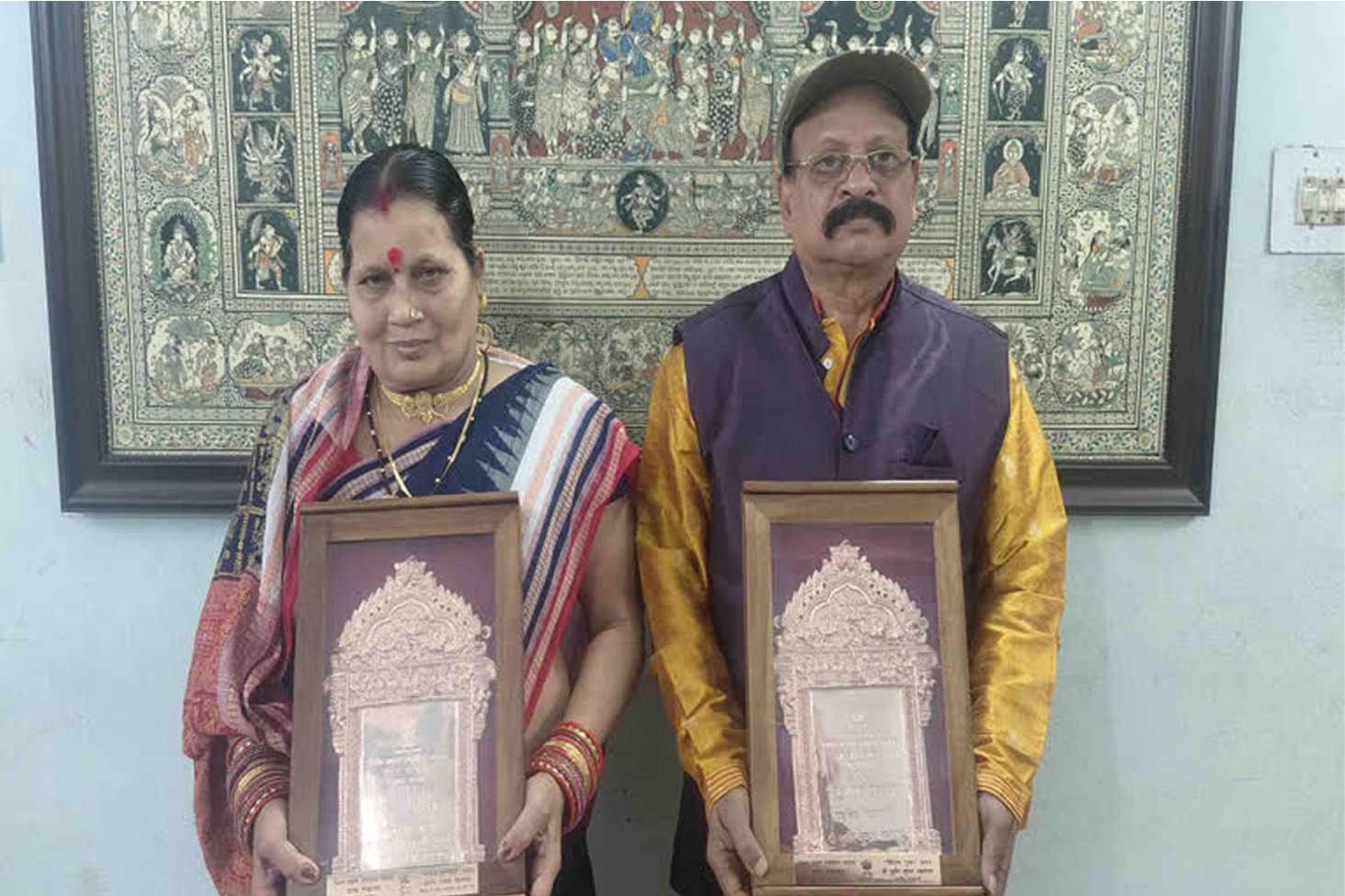
Guru Sudhir and Urvashi Maharana are among Odisha's leading contemporary Pattachitra artists, dedicated to preserving the centuries-old Chitrakar tradition. Recipients of the Shilp Guru Award (2023) and the National Award (2023) respectively, they have spent over four decades creating and teaching the art of Pattachitra.

Their intricate works, inspired by Lord Jagannath, Krishna Leela, Dashavatara, and Gita Govinda, beautifully reflect Odisha's rich cultural and spiritual heritage while keeping the tradition alive for future generations.
Jagannath narrative painting from Raghurajpur
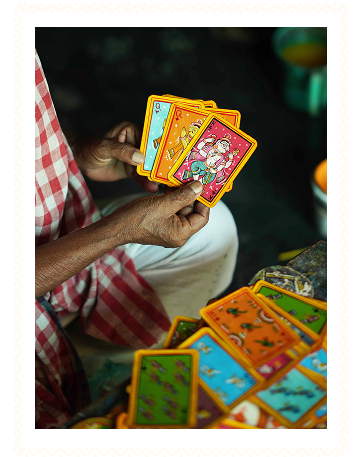
Painted ganjifa card artwork
Pattachitra detail with traditional figures

Artists

Pattachitra artisan with a large painted textile
Bhaskar Mahapatra seated with Pattachitra artworks
Artist working on a Pattachitra painting on the floor
Pattachitra artisan with a large painted textile

Bhaskar Mohapatra

Born in 1969 at Raghurajpur in Odisha 

About

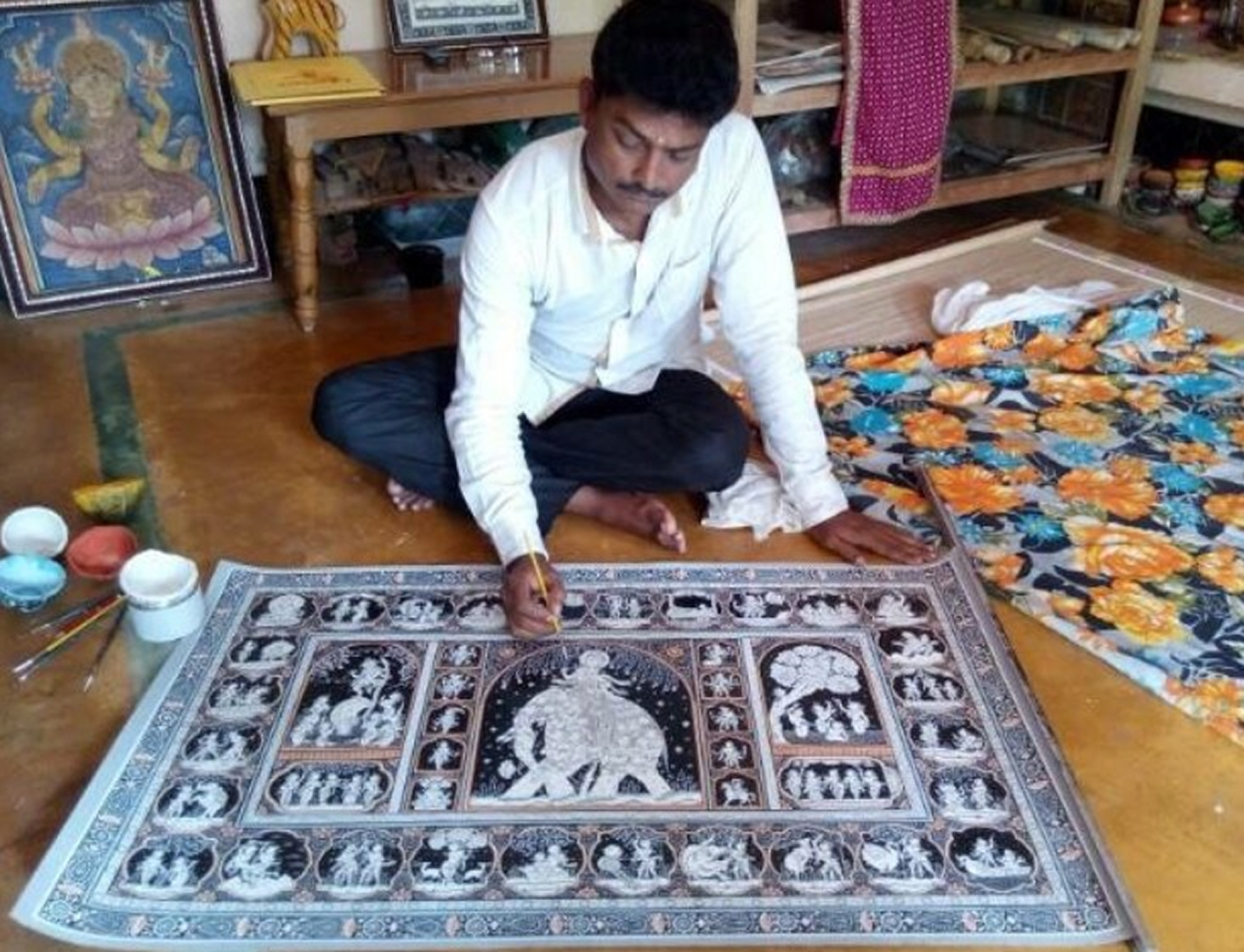
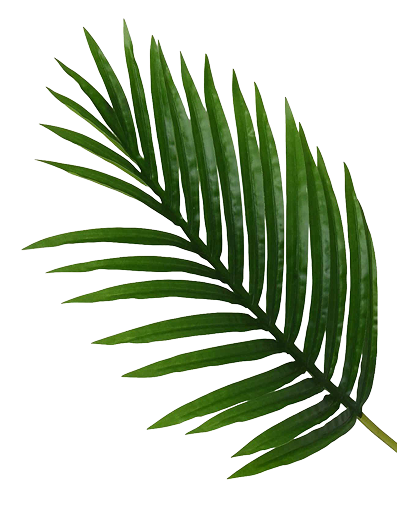
Bhaskar Mahapatra trained in the traditional art of Pattachitra under Shilpi Guru Jagannath Mohapatra in the 1980s. Working across palm leaf, paper, cloth, and canvas, he initially painted with natural pigments on palm leaves and now also uses ready-made colours on a wider range of surfaces.

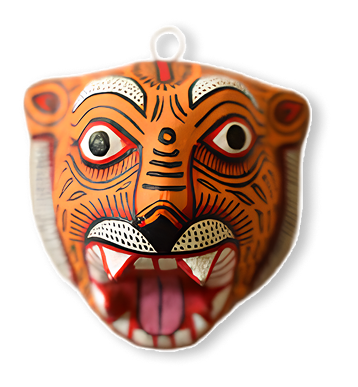
For over three decades, his work has centered on Lord Jagannath and other deities, blending tradition with evolving mediums. His art has been exhibited at Bal Bhavan, Delhi Haat, the Crafts Museum (Delhi), Juhu Tara Road (Mumbai), and the India Festival in America. A recipient of the Lalit Kala Academy Award, his Pattachitra has extended beyond paintings to adorn saris, dresses, coconuts, cushions, paper masks, woodcraft, traditional wall murals, and temples.
Ramayan inspired Pattachitra painting
Painted wall and craft objects in Raghurajpur
Pattachitra work in progress on prepared canvas

Artists

Pattachitra artisan with a large painted textile
Bhaskar Mahapatra seated with Pattachitra artworks
Artist working on a Pattachitra painting on the floor
Pattachitra artisan with a large painted textile

Bijoy Kumar Parida

Recipient of the Shilp Guru Award (2018)

About

Bijoy Kumar Parida is a distinguished Pattachitra and Talapatra Chitra (palm-leaf engraving) artist from Odisha and a recipient of the Shilp Guru Award (2018).

Renowned for his intricate craftsmanship and mastery of traditional techniques, his works depict themes such as Lord Jagannath, Krishna Leela, and Dashavatara, preserving the rich artistic and spiritual heritage of Odisha for future generations.
Circular ganjifa inspired Pattachitra motif
Jagannath Pattachitra panel
Craft objects and painted surfaces in Raghurajpur
This is an interactive story of a unique folk-art form that dates back centuries. A narrative-based scroll art lovingly dedicated to the divinity of Lord Jagannath. Scholars suggest that Patta Chitra dates back to the 2nd century BCE to the mural art found inside Khandagiri and Udayagiri Caves of Bhubaneswar and in the Ganjam district of Odisha.

Treasured amongst followers & patrons and preserved by the artisan hamlet of Raghurajpur near Puri, Odisha. India’s first heritage village. Here every house is a sacred living studio, immortalising the tales from the temple, its rituals, folk stories, and epics like the Ramayan, Mahabharat, and Bhagavat Purana. Till today, it carries this rich ancestry proudly.

This is our humble tribute to the sheer beauty, craft and provenance of this unique art form, its place of birth, its legends, and the stellar cast of artisans, makers, and guardians who sustain an eternity of devotion.

For the design and development of this interactive story we have relied on assets and references that have been both developed internally and sourced from different quarters - all of whom share a deep love and devotion towards Lord Jagannath and this legendary temple craft. Their work adds to the timeless layers of this legend. Thank you for that. In case we have missed out on anyone inadvertently, please accept our apologies and a few warm hugs.


Jai Jagannath!


This interactive digital story is best experienced in full on a desktop.